A replacement MLO for the closed cabin house in Valentine. The base game gave it no way in. This gives it a full walk-in interior, furnished as a lived-in home, with 94 props placed as true MLO entities and 41 parts modelled for this build. It drops in as-is, replacing the game's own cabin house, so there are no coordinates to set and no framework needed. Because it replaces the game's own files, another MLO editing the same building will clash with it. The full file list is in the documentation.
9.99 USD
Product Features
One Room, Furnished as a Home
A single open room for living, sleeping and cooking, dressed as somewhere a character lives rather than somewhere they queue. 94 props are placed as part of the interior itself, so they stream with the building instead of arriving when a script notices a player.
Forty-One Parts Modelled for It
Exposed roof trusses, a ridge beam, roof boards, gables, curtains and rugs, built for this cabin rather than pulled from the game's own library. That is where the difference between a dressed room and a reskinned shell actually sits.
Eleven Lights, Seven of Them Flickering
Seven lamp and stove lights that flicker, and four soft daylight lights sitting at the windows. The interior borrows Rockstar's own Valentine timecycle rather than carrying a custom one, so the inside reads as the same time of day the town is having.
Three Scripts, No Setup
This is not pure geometry. One script loads the interior before players reach it, one holds the furniture in place, and one clears a few plants that would otherwise grow through the build. They start themselves and have nothing to configure.
The Furniture Stays Where It Is
Walking into a chair does not send it across the room, which is the usual tell for an interior assembled from loose props. The script that does it leaves the door and the windows alone, so those still behave normally.
It Loads Before You Arrive
The interior is pulled in early as a player gets close rather than at the moment they step through the door, so the room is there when they look in rather than assembling around them.
One Door, One ID
The cabin door carries its own ID, and the model, coordinates, heading and both the signed and unsigned ID are printed on the Dependencies tab here, so any lock script can take it. Ready-made config rows for vorp_doorlocks and for rsg-doorlock on both its 1.x and 3.x layouts come in the download. Without a lock script the door still opens and closes.
An Export for Teleports and Housing
waitReady tells your own code when the interior has finished loading, which is the piece a teleport or housing script needs: fade out, move the player, wait on this, fade back in. Without it a script has to guess how long to hold the screen.
It Replaces Files, So It Can Clash
Worth knowing before you buy. The build overwrites eleven of the game's own files for that corner of Valentine, and only one copy of a game file can load, so another MLO editing the same building cannot run beside it. The eleven are listed in full on the Dependencies tab, so the check is one you can make before paying rather than after. A separate build ships for running it alongside the freight station MLO.
No Navmesh, So No Wanderers
The interior carries no navigation mesh, which means NPCs and horses cannot path their way inside. Said plainly because it is a design limit rather than a bug, and because it is the first thing somebody notices when they expect the town to walk in.
Scripts That Still Read No Core
The interesting half of the framework answer, because this one does ship code. All three scripts are client side and concern themselves with geometry: preloading it, holding it still, clearing planting around it. None reaches for a core, a database or a server event, so there is nothing to detect and nothing to configure for VORP, RSG Core or RedEM:RP.
Nine Megabytes, Boxes for Collision
Around 50,100 triangles inside and 18,100 outside, and about 9 MB on disk. The collision is separate from what you see, built as roughly 70 triangles and 25 boxes rather than traced around the visible geometry.
REQUIRED A RedM server, tested on artifact 36727The only hard requirement. The seller gives the build it was tested on rather than a floor, so an older artifact is untested rather than known-bad. This is the second product here to name a number at all; everything outside the MLOs asks for a recent build and leaves it there.
REQUIRED No other MLO touching the same buildingStated as a requirement because it behaves like one. This build replaces the game's own files for that corner of Valentine, and only one copy of a game file can load, so another MLO editing the same building cannot run beside it. The eleven it replaces: val_05_res_e.ydr, val_05_res_e_dcl.ydr, val_05_res_e_veg.ydr, val_05__strm_0.ymap, val_01_.ymap, amv_zone_15.ymt, amv_zone_15.ytd, l_09__hd_0_2_-1.ydr, l_09__collision_3.ybn, jklm_7_10_area_lod_combine_collision_12.ybn and hi@jklm_7_10_area_lod_combine_collision_9.ybn. Check that list against whatever you already run. A separate build ships for running this beside the Valentine freight station MLO, which would otherwise be one of those collisions.
OPTIONAL A frameworkNot read. Three client scripts ship with the interior, and none of them asks what core is running: they preload the room, hold the furniture still and clear some planting. Nothing touches a database, a server script or a framework export.
OPTIONAL Other resources or a databaseNone. No SQL to import, no table to create, no library to load and no other resource to install first. The folder goes in resources/ and one ensure line goes in server.cfg.
OPTIONAL A door lock scriptOnly if you want the door lockable. The door is p_doorsgl01x at -281.0359, 913.9656, 127.1734 on heading 215, and its ID is -1913318200, which is 2381649096 unsigned. Ready-made config rows for vorp_doorlocks and for rsg-doorlock on both its 1.x and 3.x layouts come with the download. The door opens and closes without any of this.
Not if you use the right build. Both replace game files for Valentine and there is an overlap, so a separate with_rm_freightstn build ships for exactly this pairing. Install that one instead of the standard build and the two sit side by side.
Only one copy of a game file can load, so the two cannot both be in effect. The eleven files this build replaces are listed on the Dependencies tab, so you can check a clash against what you already run before buying rather than after.
No, and this is the one operational rule worth remembering. Restarting a map resource with players connected can crash their game. Restart the whole server, and have players close RedM completely before they rejoin rather than reconnecting from the pause menu.
Nothing to configure. One pulls the interior in before a player reaches it, one holds the furniture in place, and one clears a few plants that would otherwise grow through the building. They start on their own and have no settings.
No, and that is deliberate. One of the three scripts holds it still, so a chair stays where it was placed. It leaves the door and the windows alone so those still move as they should.
They cannot. The interior has no navigation mesh, so nothing that paths around the world can find a route inside. Players walk in normally; anything driven by the game's own navigation does not.
The resource exports waitReady for that. Freeze the player, fade out, move them, then wait on it before fading back in, which is what stops somebody arriving in an empty room. It takes a name and a timeout in milliseconds and returns whether the interior came up in time, and the notes that ship with the download give the call in full.
No, it is the building. Housing, ownership, keys, jobs and anything a player does inside are yours to add or to buy elsewhere. The door ID and the ready signal are the two hooks it gives you to attach them to.
RDR2 is the game this is built for. It is not a second platform: the download is a RedM resource, a folder in resources/ and one ensure line, and three of its client scripts only run under RedM, so the furniture would not be held in place and the interior would not preload without them. Single player is not something the seller claims or tests. FiveM is a different game and it will not load there at all.
Because it is built from boxes rather than from a copy of what you see. Roughly 70 triangles and 25 boxes cover a room of flat walls and floors exactly, and cost far less than a collision mesh traced around the visible geometry would.
Still stuck? Ask in our Discord and we will answer.
No reviews yet. Using Valentine Cabin MLO? Share your experience on Discord.
At a glance
Code access CFX Escrow, or full source on the Open Source edition
Last updatedNov 20, 2026
PlatformRedM
v1.0.0
current
One cabin in Valentine, opened up and furnished.
The building
A walk-in interior for the closed log cabin in Valentine, which the base game gave no way into.
One open room for living, sleeping and cooking, furnished as a lived-in home.
94 props placed as part of the interior rather than spawned at runtime.
41 parts modelled for this build, among them exposed roof trusses, a ridge beam, roof boards, gables, curtains and rugs.
One door with its own door ID, four windows with curtains, and 11 lights: 7 flickering lamp and stove lights and 4 soft daylight lights at the windows.
How it is built
Custom collision, room-tagged, built as roughly 70 triangles and 25 boxes.
Rockstar's own Valentine timecycle for the interior lighting rather than a custom one.
Custom ambient volume zones for the room and the door, and a reflection probe for the room.
Around 50,100 triangles inside and 18,100 outside, about 9 MB in total.
What ships with it
Three small client scripts that start themselves: one preloads the interior as players approach, one holds the furniture in place, one clears planting at the building.
A waitReady export, so a teleport or housing script can hold the screen until the interior is ready.
A separate build for running alongside the Valentine freight station MLO.
Replaces the game's own cabin in place, so there is nothing to position.
Most of what a character does on a roleplay server is wait. Standing outside the saloon, listening at the bar, holding a spot in a queue. This is 94 animations for exactly that: the…
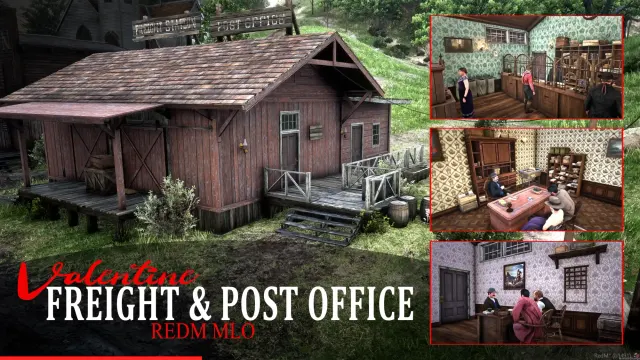
Valentine's freight depot and post office sits on the main street with no way through the door. This opens it up: three rooms to walk between, a reworked exterior, and 226 props placed into…
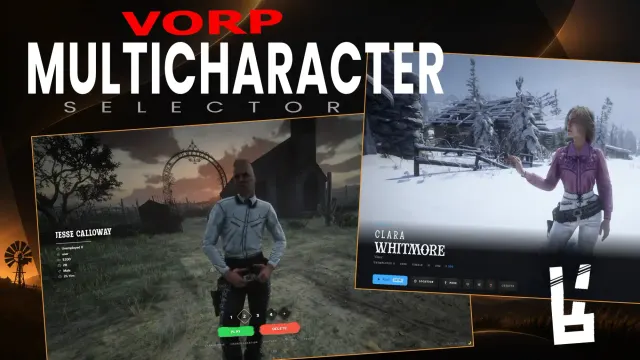
A drop-in replacement for vorp_character. Your characters stand in real locations across the map, the camera glides between them, and players pick who they are playing today from a screen…
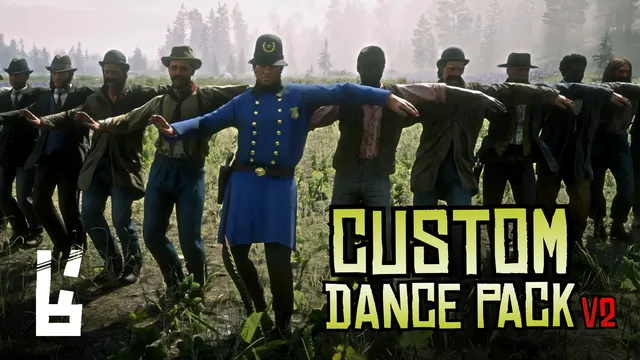
30+ custom dance animations for RedM, each with a male and a female version: 20 breakdance moves, 6 hip hop dances and 8 party dances. Delivered as native RDR2 .ycd files streamed straight…
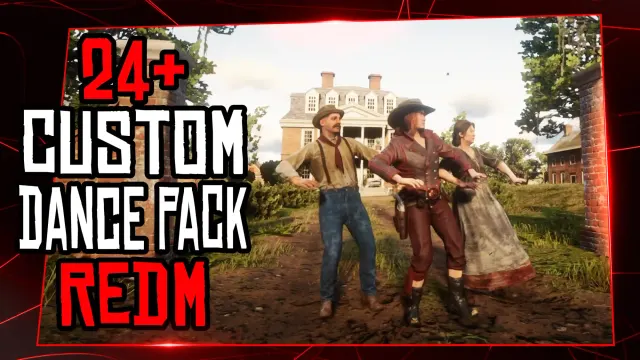
Bring your saloons, camps and events to life with 27 custom dance animations, each with a male and a female version. From samba and hip hop to northern soul spins, swing and a cheeky…
100+ custom female pose animations for RedM , delivered as native RDR2 .ycd animation dictionaries and streamed straight from the resource. Poses, leans, smoking, hats down and regard…
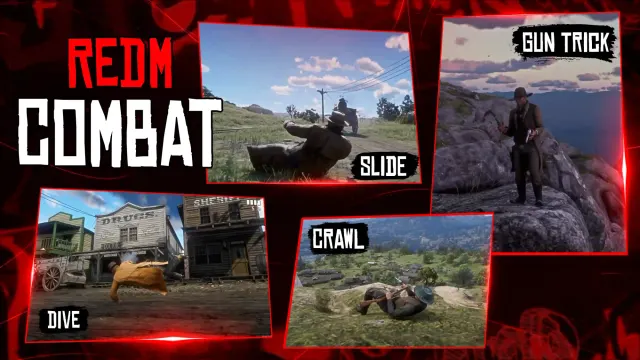
Four combat mechanics in one resource. Slide, roll, gun tricks, and a dive that puts you on the ground still shooting. Built for servers where a gunfight is currently two people standing…
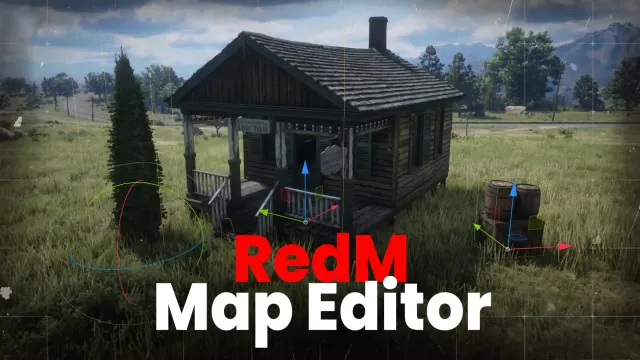
Build your map inside the game. Open /mapeditor, place what you want, export when you are done. This RedM map editor gives you 17,473 in-game props, people, animals and wagons, four export…